
How MSPs Can Best Utilize A Standards Library

Any good MSP is going to want to check on how their clients are aligned to their own and industry best practices.  Making sure that clients are compliant with things like HIPAA, NIST, PIPEDA, and GDPR means that the client is better prepared for different types of failures and nefarious events.

In the TruMethods model, a Technology Alignment Manager, aka a TAM, answers yes/no questions to make sure the client is compliant with whatever best practices (aka standards) that are being checked.  The vCIO then goes through and evaluates how big of an issue the answers to those questions are.  Our myITprocess software helps MSPs be more vigilant by not only having an innovative TAM process as a pillar function of the system, but by providing different benchmarks and templates to wh

ich MSPs can hold clients.  But how do we use these most effectively?

First, it’s important to understand the difference in our system between the Standards Library and the Client Template.  The Standards library is where all of your standards are going to live, no matter if one client or one hundred clients need that particular standard.  When a user selects the specific client from their list in the Standards Library, they will be taken to the individual client page of standards that are specific to that particular entity.  myITprocess users are able to take subsets of their library as a whole and apply them to individual companies; after all, a small bakery is not going to need HIPAA standards like a dental office will.  There is no reason for a non-medical client to need medical vendor benchmarks, and myITprocess enables users to have that flexibility through including and excluding sections and categories as needed.

Now that we know generally what we want to check for a client, how do we go about figuring out what to do first? It’s all about priorities; if everything is important, then nothing is important.  Many of our members right now are focusing on Security as well as remote business continuity, as both of these sections are critical for people being able to work from home right now.  There are other MSPs that are finding it easier to check things like core infrastructure, because when they go on site there’s no one else in the building, so it’s easy to get that type of review completed.  In general, we recommend MSPs go through their entire standards template for a particular client within a calendar year so that everything is checked at least once every 12 months.

What about going on site? While every locale has different rules and comfort levels, myITprocess is still set up currently to do the entire TAM process from the safety of your office.  One of the first things our Standards Manager did at the beginning of the pandemic was make two templates that can be completed 100 percent remotely, and they are available to all myITprocess members through myITemplates.

What about completing reviews? There are two big pieces of advice the MSA team gives when it comes to doing a TAM review (which some members may call an engineer review or an audit).  One, do small reviews.  A small review that is completed is so much more valuable to everyone involved than a large review that is completed in 6 months, or never completed at all.  Especially if an MSP is at the beginning of their myITprocess usage lifetime, reviews of 100 questions or less are most optimal.  The second piece of advice is to make a schedule for reviews, and then stick to it as much as humanly possible.  Let’s say someone is half time on the support desk and half time on TAM.  Every Tuesday they always work on their TAM reviews, but this particular Tuesday someone’s firewall goes down and it causes a giant mess of tickets.  Do you take the TAM off their review to go work on those tickets? No!! The TAM process is absolutely vital to the TruMethods model of Technology Success, as they are the first people to really see the details of the client and gather information.

Sometimes the tech team will feel like they’re going through the same questions, getting the same answers, but tickets are creeping back up.  What does this mean? While there are a few things that could indicate such an issue, it definitely sounds like the Standards Library needs to be revamped.  The questions we ask should address the problems that are arising as frequently as possible.  TruMethods recommends having a Standards Committee meeting on some kind of regular interval, and it usually ends up being once a month.  A member of management, a member from the support team, and a TAM and/or vCIO are all good people to have on the committee, as they all have different perspectives on how the template should change.  Best practices and new threats are evolving all the time, so we need to evolve with them.  The committee meeting and updating standards regularly ensures that the list is doing its job through the review process and keeping your tickets down.

While there are many ways to approach the Standards Library, at the end of the day every MSP needs to keep clients aligned with best practices.  We’ve seen members with 120 question libraries, and members with 1200 question libraries and both can be successful.  As long as a disciplined schedule is kept and work expectations are manageable, every MSP can have a useful and impactful set of standards.  Our Standards Manager Brian Dappolone has just launched a new template on jumpstarting your MSP cybersecurity!
New call-to-action

Our New Integration with IT Glue: What it Means for vCIOs

You’ve probably heard the exciting news about the myITprocess integration we developed for IT Glue — and yes, we’re just as thrilled about it as you!

Our goal has always been to make vCIOs more effective. One way to accomplish that objective is by helping them communicate better with their clients. vCIOs can create strategic roadmaps in myITprocess, which enable vCIOs to build not only meaningful relationships but also trust with their clients.

Our integration with IT Glue provides vCIOs with the additional information they need to create strategic IT roadmaps quickly and efficiently with myITprocess.

For example, part of the integration with IT Glue assists vCIOs with product lifecycle management (PLM). By turning on the IT Glue integration, vCIOs using myITprocess can now view when operating systems and other solutions are set to expire. vCIOs can then easily add these recommendations into their strategic roadmaps, which makes things a lot easier for vCIOs using myITprocess.

For instance, take presentation preparation. A vCIO can spend as many as 20 hours pulling data for a quarterly business review (QBR). The new integration with IT Glue significantly cuts the time it takes a vCIO to prepare for a presentation with a client. Instead of adding everything manually, vCIOs can simply add the easily accessible data to their IT strategic roadmaps.

Over the next several months, we’re going to be working on new integrations with IT Glue. We want vCIOs to be able to highlight key points for their clients. Our goal isn’t just to replicate the data from IT Glue (that wouldn’t provide any value to vCIOs). We simply want to provide vCIOs with powerful insight into everything that’s happening with their clients.

Oh, and we’re not stopping with IT Glue integrations! We already have a few other integrations in the works, but I’ll reveal the details at some other time.

For us, it’s all about putting vCIOs in positions to be as effective as possible and build the deepest relationships.

Request My Demo

Avoiding IT Standards Overload

MSPs that use standards have seen a lower ticket count, less reactive work and have more time to focus on strategic relationships with clients. myITprocess provides MSPs with a centralized platform to manage their clients’ technologies and develop and maintain a library of technical and compliance standards.

TruMethods also provides robust Standards Library templates in our myITprocess software. This may seem overwhelming at first, but let’s break this down. Statutory, regulatory, and contractual compliance is no easy task; there are many requirements necessary for alignment. Examples like NIST 800-171, HIPAA, and CIS Controls 7.1 contain an overwhelming amount of questions and categories. At times, it can feel like drinking from a firehose; It is almost unrealistic to implement and enforce everything required by these agencies.

Disillusionment can occur when our TruMethods members request standards templates for myITprocess. Some are dismayed at the number of questions and the lack of How-To information included. They are often cited as unrealistic or time consuming for a Technology Alignment Manager (Net Admin) to complete in a single visit. These are valid responses to this amount of information and I wanted to clear up some confusion.

  1. Unless otherwise noted, all compliance templates are verbatim from their sources. TruMethods made the decision not to interpret any information from the source material into these templates. We do not want to define how a member should achieve compliance. We feel it is up to the member to perform proper due diligence and make their own interpretation of the requirements.
  2. The templates do not prevent a member from performing the work. Compliance is case by case—as mentioned above—and the How-To and Why are we Asking fields are often intentionally blank. This prevents TruMethods from determining the outcome of the question for its members.
  3. Completing the requirements may require multiple visits or a separate project. I have received ample feedback about compliance standards being impossible to complete during a standard TAM visit. That’s OK! This presents the option for two different opportunities: Add it to AISP (All-in Seat Price) or charge as NRR.
    • If your organization specializes in a particular industry (healthcare, legal, financial), rolling ongoing assessments into your AISP is probably worthwhile since compliance is not a ‘one and done’ effort. Adding the cost of ongoing compliance to AISP may make the most sense.
    • If performing a compliance audit as a one-off project, this will add to your NRR. Depending on the frequency of compliance assessments for customers, these provide the perfect NRR opportunity for almost any customer.
  4. Never feel obligated to use a template or benchmark in its entirety. You can use the questions and categories to build your own custom audit depending on the needs of your customers. Take these questions piecemeal, use what you need, and discard the rest. Or use all of them, whatever helps you meet the goals set forth as an organization.

Everyone has the best intentions when performing onsite assessments. Reducing the number of questions to a manageable level prevents ‘analysis paralysis’, allowing you to concentrate on those that matter most to the customer.

Request My Demo

Giving Back and the TruMethods Way

If we are not making someone else’s life better, are we really doing our best? Our President, Gary Pica would say the answer to that question is no. What does giving back really mean in the TruMethods way?  There are a few facets to the concept we encourage members to embrace:

The obvious definition of ‘giving back’ is doing volunteer work and helping your fellow humans. On an MSP level, this could also mean offering services to one or two clients that maybe can’t afford your true Company Way, but definitely deserve it. While it would not be good business practice to give them service for free, maybe we can give them legacy pricing, or a percentage discount.  (NOTE: We unfortunately cannot do this for every client, but since we live with our averages, one or two is fine, especially if we have a good amount of clients at the top of our average AISP range.) We can do our part to keep that adorable Mom and Pop shop that’s been open for 50 years that is now on a fixed income a fighting chance to stay open for another 50 years.

Giving back also means doing our best for our clients every day, in every way.  This means providing Technology Success to as many people as we possibly can. The Tech Success process is really quite symbiotic, because not only does it help us as the MSP keep our noise down, standardize our clients, and optimize our profits, but it helps the client do what they do in a more efficient way.  If a client doesn’t have to continue to call about this ticket or that fire, they have more time to invest in doing what their business actually does. This causes such a domino effect!

Even throughout the time of Covid-19, TruMethods has been giving back to our members and to the community by doing what we do best – showing people how to run their businesses in an even more awesome way during a time when many people are simply ‘hunkering down’.  The content we put out is not only informative and comprehensive, but also uplifting; Gary wants to remind people that if we all have to go through a pandemic, at least we can help ourselves and more people along the way.

Gary didn’t have to start TruMethods.  He didn’t have to show people how he did what he did, or help them reach Technology Success. He started the company because he wanted to help others.  The TruMethods way as a whole is about helping others, with our unique perspective and business practices. While we all work hard and sales people need to make sales, often times it feels like sales are just a by-product of helping people.  Clients see this sincerity in every situation with which you interact with them, and it helps them to trust us. By giving back to the client through Technology Success and helping the community, we prove that trust is well-deserved.

New call-to-action

How To Evolve Your MSP Business in a World of Uncertainty

The last thing you want is for your business to bestagnant. Even when there’s economic stability you should always be looking for ways to evolve your business.While this may be challenging to do during uncertain times, it’s possible if you take the right steps.

There are several ways you can evolve your business in a world of uncertainty. 

Begin developing your business plan for 2021

It’s probably safe to say that you’ve adjustedyour playbook from the beginning of this year.But, believe it or not, now’s the time to begin planning for 2021, even though it may be more challenging than usual. 

We don’t know what next year is going to bring. We never really do, but we’ve all been hit hard financially, mentally, and physically this year, and we’re all hoping for something better in 2021. While things are a bit chaotic right now, building a business plan for 2021 should be your number one priority. 

Begin by starting with your vision, evaluating your business targets and breaking down your annual business plan into quarterly action plans

Find a peer group and stick with it

If you’re not already in an industry peer group, consider joining oneAn industry peer group can help you take your business to the next levelSometimes it’s necessary to get out of your bubble if you’re lookingto produce different results, especially in a time of crisis. 

Peer groups are a great way to learn from others in your industry and gain an outside perspective on your business hurdles.Being opento several points of view is oftentimes the first step to finding solutions to your own challengesIt’s usually difficult to identify the solution to a problem when you’re too close to it.You learn with each other and from each other in a peer group. Peer groups also hold you accountable.

There are many reliable peer groups in our industry. At TruMethods, we have the TruPeer peer group, which is designed to help MSPs grow by focusing on ongoing training in addition to traditional peer support.

What do your clients really want?

Your clients are evolving to adapt to everything that’s going on in the world today. When your clients evolve, it’s in your best interest to evolve along with them. Remember: You’re servicing them. 

Understand the type of business you’re in. You are solving not only your clients’ IT problems, but also their business problems.That’s what a World Class MSP doesWhenthe needs of your clients changewhat you’re delivering may need to be tweaked a bit.You must be able to adapt to their needseffortlessly and provide your clients with value and a sense of stability during an uncertain time. 

If you can do both of those things, adding customers at the right price shouldn’t be a problem.

While it’s not always easy to evolve your business in a world of uncertainty, it’s necessary. Keep evolving by keeping your business plan up to date, joining a peer group and providing additional value to your clients. 

New call-to-action

TruMethods Member Q&A: How MSPs Can “Look Beyond”

While the COVID-19 pandemic has the world upside down at the moment, things are going to get better, and when they do, MSPs must be ready to capitalize. That’s why being able to “look beyond” is key to their success. 

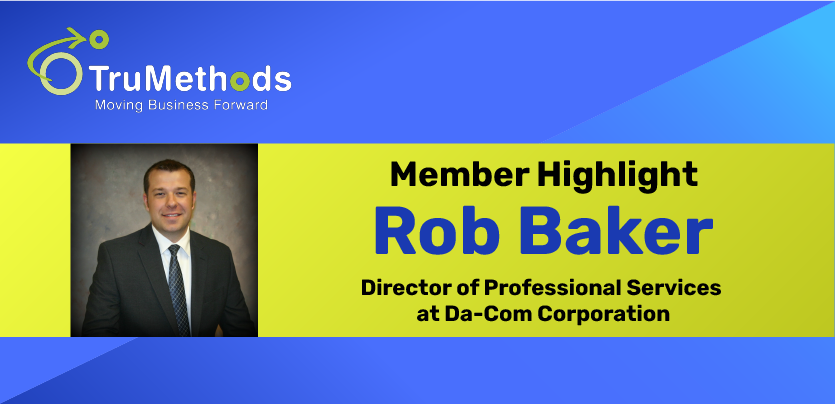
First and foremost, we have started to dedicate a lot of time towards our Inside Sales Process and ramping up our activity to develop more leads for 2021,” said Rob Baker, Director of Professional Services at Da-Com Corporation, Columbia, MO-based MSP. “We have changed our incentives to better align with our goals for the Inside Sales Role and have really defined what our ideal customer and message should look like.” 

During our one-on-one discussion, Rob provided insight on how myITprocess fits in with his business activities, how he’s improved the vCIO process during the COVID-19 pandemic and what he’s doing to look beyond.  

A lightly edited transcript of our conversation follows.

When and why did you become a TruMethods member? 

I’m not sure on the exact timing, as I was strictly overseeing the sales side of the business at the time.Mike Keen was our director of IT, and he introduced the service methodology to our company sometime between 2018 and 2019.We really didn’t start moving everything into place until late in 2019, when I took over, and we started implementing myITprocess.Our Member Success Advisor, Heather Caporaso, really helped us ramp up, and then we have just recently, over the last few months, started implementing the Inside Sales Process. 

How does myITprocess fit in with your business activities? 

Not only has this brought us closer to the leadership within our clients businesses, it has also helped us gain more project work due to that new found trust.Our help desk calls have really decreased since we have found our rhythm, and we’ve even been treating our own business with these same methods, which has kept us on top of our business and technology, as well. 

How have you improved the vCIO process during the COVID-19 pandemic? 

Our vCIO is scheduling more frequent touches with our clientsand we have even offered these services at no additional costs to legacy program customers that have yet to make the transition.We have already converted one to the new program since doing so.Virtual meetings and the myITprocess platform have also boosted the attendance of these meetings. 

How are you delivering strategic value through the vCIO process? 

We’ve done this in many ways, but probably most important during this time is helping them strategize on how to use this unfortunate scenario to knock out some initiatives and keep progress moving while there is less impact on the business.We’ve seen a lot of customers use this “downtime” to finally move forward with major initiatives that would otherwise put on the back burner. Especially for companies that were underutilizing technology that now are in a position to invest in streamlining their processes to reduce those bigger costs surrounding hiring. 

How have you adapted the TAM (Net Admin) role to the needs of clients during the COVID-19 pandemic?

We have still been going onsite for the majority of our customers, although, at first, we were giving them the option.In the Midwest, our customers have been fairly open to in person visits as long as everyone wears masks.Honestly, most of the offices have deployed work from home policies, so not only is there less people, but now our TAM can focus more on their alignment status without getting pulled into other conversations or the occasional misdirected issue.

How are you “looking beyond”?

For the remainder of 2020, we have spent a lot of time reviewing our best practices within the TruMethods framework and working with vendors to make sure we are utilizing the technology to help us achieve better results for our customers. We are currently switching RMM, PSA, help desk, and SOC vendors to do this, so we are excited to further align our processes with these tools.Security has been a major focus of our vCIO during QBRs and we look to have a very successful 2021, as we have expanded our offering to include those services out of the box.

New call-to-action

New myITprocess Template: MSP Cybersecurity Jumpstart

A little over seven months ago I presented a topic at our TruMethods event, Schnizzfest, that gained a lot of steam in recent months. The subject of cybersecurity for Managed Service Providers was popping up everywhere from news websites to social media.

The topic of my presentation centered on the vulnerabilities of MSPs and why they are the target of malicious attacks. I introduced a template called Improving Cybersecurity for Managed Service Providers designed to get MSPs started on their own cybersecurity program. Templates are part of the myITprocess Standards Library, a repository of compliance and best practices our members use to align their customer’s technology and strategy.

The template differed from other templates available in myITprocess and targeted the goals of MSP security.

  • 56 questions derived from 112 NIST Cybersecurity Framework sub-categories.
  • Clarified the requirement language from the original text.
  • The How To field mapped to relevant CIS Controls 7.1.

Template revision 1 intended to get the ball rolling. There was not a lot of information in the How To section for MSPs to get started without much research of their own. I was relying on existing experience and real-world scenarios for MSPs to take the baton. The idea is that this template provides a level of utility for our members. The How To field was quite barren and lacking diversity except for mappings to CIS Controls 7.1. Time for an update!

Recent world events and overnight changes to our workflow called for a revisit and update to the template. More businesses shifted to work from home than we ever thought possible and focused more on the need for cybersecurity. I made some drastic changes to the template for revision 2 to help members stay on track with their own cybersecurity program.

  • Changed template name to ‘MSP Cybersecurity Jumpstart’ to differentiate it from other industry best practices.
  • Questions now align with CIS Controls 7.1 Implementation Group 1.
  • How To field maps to relevant NIST CSF subcategories and provide other informational sources.
  • Reduced the question count from 56 to 41.

TruMethods members can find the MSP Cybersecurity Jumpstart in their standards library under myITemplates. With the help of myITemplates, you can better tailor your assessments for clients based on their specific industry needs and requirements.

As I mentioned before, the Jumpstart template is an evolving project, so look for changes over time. This project improves through user feedback and industry changes, meaning updates will occur once or twice per year.

Request My Demo

TruMethods Member Q&A: Fitting myITprocess in With Your Day-to-Day Business Activities

There are plenty of ways for you to fit the myITprocess software, whichenables MSPs to establish IT standards, create alignmentand develop strategic roadmapsin with your day-to-day business activities. You just need to determine what works best for you and your clients. 

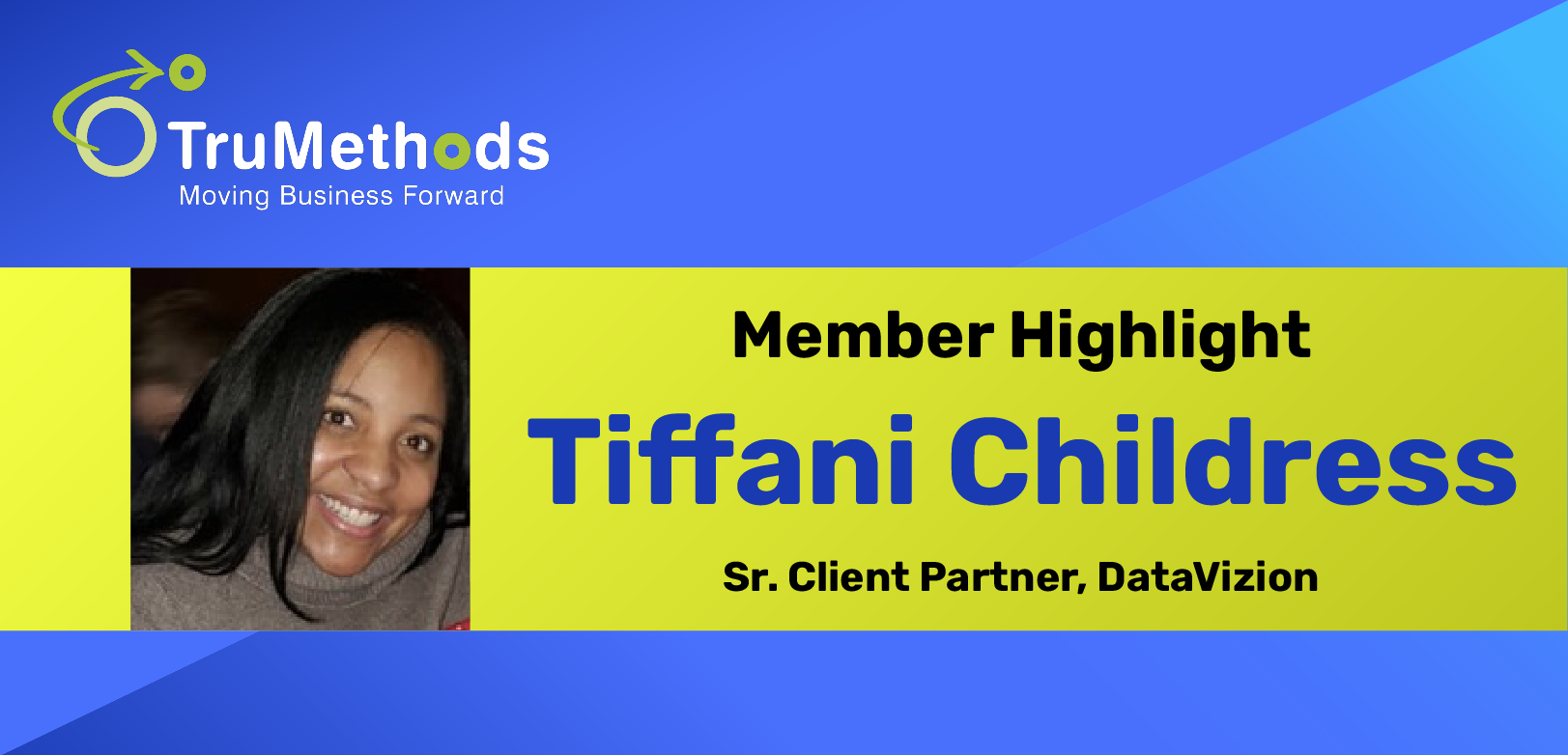
“myITprocess is a part of my day-to-day business activities,” said Tiffani Childress, senior client partner at DataVizion, a Lincoln, Nebraska-based MSP and TruMethods member. We utilize myITprocess for our Complete and Select agreement clients, which is about 50.”

During our one-on-one discussion, she explained how she fits myITprocess in with her day-to-day business activities, how customers have responded to the Strategic Roadmap available in myITprocess and how she’s “looking beyond.”

A lightly edited transcript of our conversation follows.

When and why did you become a TruMethods member?

I became a TruMethods member March of 2019. My company then joined as a whole in January of 2019 to improve our managed services and sales platforms. The accessibility of webinars, business review models, and strategic roadmaps were the most enticing to our leadership team.

How does myITprocess fit in with your business activities?

I use it as a workspace to update initiatives on a per client basis, build quarterly business reviews and perform client reviews during the onboarding phase with new clients. The new budget report provides a slick snapshot of an annual budgetary review of our managed services clients and is a wonderful forecasting tool.

How has your process shifted as a result of COVID-19, and how has TruMethods helped with this? 

My process has shifted a bit in the midst of all things COVID-19 related. The biggest shift is finding a way to be effective virtually versus in-person. In order to continue building upon our partnerships, the level and frequency of communication has increased. TruMethods helped tremendously in the wake of COVID by hosting a webinar pertaining to how to deal with customer relief requests, client retention and how to continue to facilitate the sales process in the midst of uncertainty.

How have your customers responded to the Strategic Roadmap in myITprocess?

My customers absolutely love the Strategic Roadmap. It provides accountability from both parties. It’s a clear depiction of what initiatives have taken place and makes budgeting fun.Another feature that is beneficial is that you are able to conduct the meetings in realtime, so their words/recommendations are captured. They especially appreciate the reportingso they can take a concrete document back to their respective teams.

How are you “looking beyond”? In other words, how are you preparing for 2021 and planning to make the most out of the remainder of 2020?

How I’m looking beyond is to finish the year strong and attempt for total completion of the initiatives slated per client for 2020. My approach for 2021 is to seek innovative methods to bridge the gaps of stale and antiquated environments. For example, streamlining organizational Microsoft Office licensing, storing more data in the cloud, cybersecurity and more futuristic thinking versus “how it’s always been done.” I have TruMethods and myITprocess to thank for the inspiration to strive for better than the status quo.

Request My Demo

The COVID-19 Impact on MSP Delivery Areas

Every business is broken down into different sections.  Every cog in the machine needs to work properly in order for the whole to be more than the sum of its parts.  The MSP world is no exception, and every aspect of the system can be broken down into even smaller systems.  The service desk in particular can be difficult to divide. Who does what?  What is important to have its own department?  And how have things changed since we entered a pandemic 6 months ago?

The TruMethods philosophy divides Service Delivery into five different areas: Centralized Services, Technology Alignment, vCIO, Support, and Professional Services.  All but the latter are included in our all-in seat price model.  These delivery areas affect multiple parts of the business like packaging and pricing, sales, quality of service, and employee leverage.  We structure things this way to have clear accountability, consistent delivery, and manage cost drivers.  They are all important in different ways and contribute to the business as a whole working properly.

In the most basic terms, the Technology Alignment Manager (this person does not have to be management, they are simply managing their alignments) or TAM is going to be in charge of answering the yes/no questions on your reviews.  The vCIO is going to evaluate those answers and correlate technical risk to business risk through the business relationship they have with their clients.  The support desk answers tickets and smaller problems and escalates them as necessary up the support desk chain.  Centralized services takes care of all the programs that work behind the scenes to keep clients safe and manage patches, backup, the runbook and other tools.  Finally, Professional Services completes installation of new technology and helps to manage relevant documentation.

Knowing the edges of a role is a great first step in figuring out how to structure your service delivery team.  In optimal circumstances, everyone would only be doing one role and not be wearing multiple hats, but we know that isn’t always the case.  Having scheduling discipline (and sticking to that schedule!) can go a long way in making sure everyone is on the right page.  For example, if a team member spends half their time on the support desk and half their time as a TAM, they shouldn’t be pulled away to answer tickets when they’re in the middle of a review, or vice versa.  Having strict edges helps people not step on each other’s toes, because they always know what is their responsibility and what is not.

Another thing to be aware of is who is in what role, and if their skills really apply to the job they are currently doing.  Could someone else be better in that role? Could that employee use their best skills to more of an advantage somewhere else? People communicate more fluidly and easily about their passions, which is always a good thing to keep the team honest.

In general, we have found that if an MSP focuses on the Technology Success portion of their business, which, to not put too fine a point on it, boils down to TAM and vCIO, all the other areas seem to fall into place.  This is because these two roles have the biggest and most drastic impact on the client; they lower the number of tickets received and help get projects passed to bring down noise even more.  This gives the MSP more time back throughout their day to dedicate to organizing and structuring other processes.

So how has all of this changed throughout the pandemic? Well, in many ways nothing has changed.  Technology Success is still vitally important, and the departments still work pretty much the same way even though most of our members are remote.  The most direct impact that can be seen is that many TAMs are not going on site even now, but they still do their best to check everything they can.  (It also helps that myITprocess has two templates available and ready for immediate use that have already been curated to be 100 percent completable from the safety of your home or office.) In other ways though, things have changed drastically and it can be distilled down to once concept: urgency.  Every single client is looking to get more out of their technology because there is no other choice, otherwise they can’t work in safety.  TruMethods President, GaryPica knows (and we are all already seeing) that clients are going to be changing MSPs more in the next 12-18 months than in the past 10 years, because no one is going to accept mediocrity anymore. As Gary recently said, this is the beginning of the best selling season for MSPs OF ALL TIME!

There is also urgency in security because while we and our clients are going through trauma fatigue, hacking, spyware, malware, and ransomware companies are ramping up their production and trying harder than ever to make all of our lives miserable.  They see themselves as business people just like we do, and they are going to do everything possible to make their sale.  It is more important than ever to take security seriously and make sure all avenues of ourselves internally and of our clients are protected.

While this may seem overwhelming, TruMethods has helped hundreds of MSPs reach their MSP and revenue dreams.  Great profit margins, an organized work day, and fewer emergencies are all possible through Technology Success.  Continue showing and providing value to all of your customers in real ways and rise to the occasion.  Today’s market will not tolerate anything else.

Request My Demo

Are You Maintaining the Essence of TAM During the COVID-19 Pandemic?

Every service delivery role has had to adapt during the COVID-19 pandemic, and the Technology Alignment Manager (TAM) is no different. The TAM (previously known as Net Admin) provides knowledge of the customer’s technology to the vCIO so a proper review of a customer’s IT environment can be completed.

The TAM Core consists of two items: Math and Process. The Math includes measurable drivers while the process contains priorities, steps, and tasks. The Results are the impact on the client, the business, and the person in the role. The Essence is the spirit of the role that ties the Core to the Results. The struggle for TAMs is to find a way to maintain the Essence in a remote environment.

Over the years, we’ve encouraged our members to do onsite alignment reviews of their customer’s IT environment because being onsite has multiple benefits. When you’re onsite, you’re visible. You may see or hear things of value. You get to know your client and your client gets to know you. Onsite reviews are ideal.

But the coronavirus crisis has changed the way we operate. We now must be more deliberate, visible and ensure processes are in place. Being disciplined when it comes to relationship management is key.

There are a few things to consider when maintaining the Essence of TAM in a remote environment during the COVID-19 pandemic.

What you should know about the Essence of TAM

There’s more to being a TAM than just following processes and measuring drivers. If you stick to the basics, you’ll get the job done, but to be a great TAM, you must embody the Essence of the role and tie the Core to the Results. Go beyond what’s expected of you. When you do, your clients won’t forget.

Hold SOD, EOD meetings with your clients

Holding meetings at the start of the day (SOD) and end of the day (EOD) with your clients is one of the best ways to maintain your technical relationships during the COVID-19 pandemic. Even though some of your clients may resist at first, ask them to give it a shot. If they agree to your request, it’s up to you to keep them coming back. You can accomplish this by setting expectations upfront and staying true to your word.

These meetings should be brief (no longer than 10 minutes) and have agendas. They should also be held over Zoom or some other video conferencing solution (video calls humanize virtual communications). Also, avoid being too technical with your clients on these calls (e.g., stay away from explaining how many patches your team installed). Always aim to deliver value with your calls.

Intraoffice communication

TAMs can use Microsoft Teams or other platforms to create a specific channel for TAM visits. It’s important to note that TAMs should set expectations around these virtual TAM visits. For example, TAMs should set a schedule of when they’ll be available to meet and stick to it. They must establish boundaries with their clients. For instance, they shouldn’t monitor the channel when they’re not scheduled for a TAM visit.

It’s possible to maintain the Essence of TAM in a remote environment if you communicate with your clients on an ongoing basis and are adding value where it counts!

Request My Demo