
Your MSP Sales Process: What’s on Your Preflight Checklist?

Many MSPs obsess too much over what they should say or do during sales appointments that they often forget about one of the most significant steps of the sales process — the preflight checklist.

What you do before your sales meeting is more important than what you do during it. As Chinese military general Sun Tzu highlighted in “The Art of War,” “Every battle is won before it’s ever fought.”

Before your next sales meeting, go through your preflight checklist to ensure you’re ready to tackle what prospects may throw at you.

Do you prepare for your sales appointments?

Many MSPs set themselves up for failure without even knowing it. You may ask: How is that even possible? Well, these MSPs simply neglect the basics. For example, they forget to conduct research before their sales meetings. Before speaking with a company, visit its website to learn more about it. Find out who the key players are and investigate their backgrounds. Do you recognize anybody? Do you have any shared LinkedIn connections with any of the company’s executives? What about the industry the company competes in? What do you know about it? How about the company’s competitors? There’s so much information available at our fingertips. Use it to your advantage whenever possible, especially when sitting down with a prospect. When you show up prepared for your sales appointments, your prospects notice.

Do you have goals for your appointments?

Your goal should be to sell your services to prospects during your sales appointments, right? Wrong! When meeting with prospects, find out how they’re operating their businesses. How far along are they when it comes to technology? Can you add value? You should try to discover as much as you can about your prospects during sales appointments. Use these discussions to uncover potential business opportunities.

What about your attitude?

You immediately give away information by how you present yourself to prospects. As soon as the meeting starts, your prospect is judging you based on things like your attitude and personality. Life happens, but whatever upset you the morning of your meeting with a prospect, don’t let it affect your presentation.

What are the next steps?

Always plan ahead when you can. If the meeting goes well, what are the next steps? You should always know. The prospect is more than likely going to ask you. When you can provide the answer immediately, you score points by showing that you’re in control.

Have you checked in with your belief system?

How tangible are your results? Are your processes satisfying the needs of your customers? For you to sell effectively and consistently, your belief system must be intact. You must believe in the service you’re selling. If you don’t, your confidence level may suffer as a result. Prospects can recognize when there’s something wrong. Keep your foundation solid. Adjust whenever there are issues. It’s not enough to just know your business.

While knowing how to act and what to do during a sales appointment is of course key to the sales process, it’s what you do ahead of time that puts you ahead of your competitors.
MSP Sales Mistakes

Why TAM and vCIO Communication is Beneficial in MSPs

While it’s important for all roles in an MSP to communicate well with each other, the Technology Alignment Manager (TAM) and Virtual Chief Information Officer (vCIO) need to have very clear communication. They should be having meetings at regular intervals to discuss the Technology Success process regarding their shared clients for a variety of reasons.

For one thing, if the TAM sees a question that is out of alignment, answers it as ‘no’, and then sees it out of alignment again and again, they could make the assumption that the vCIO is not doing their job. This can create a feeling of helplessness and animosity in the TAM. After all, if no one is going to listen to what they say and fix what needs to be fixed, what is the point of them doing their job? In reality, the most likely reason for this is that the client has declined the recommendation that would fix the issue. If the TAM and vCIO have regular communication, this fact will be known.

Additionally, when the TAM is on-site, sometimes the client will ask what the recommendation will be to fix a particular thing. If the TAM makes a suggestion based on their educated opinion and it turns out to be a different suggestion than the vCIO is making, this can put them and the client in quite a pickle. We want to make sure the message is consistent across the Technology Success process to the client.

Information sharing also just makes for a better workflow. Everyone works better when they know everything that pertains to their role. The TruMethods framework has proven time and time again that having the vCIO and TAM know what the other is doing (on a relatively high level) is very helpful.

Another thing to consider is that moving from the TAM role to the vCIO role can be a natural progression for many people. If the TAM is involved appropriately in the vCIO’s workflow, this will facilitate moving from one role to the other. The TAM also gets to see their hard work pay off, which is always very rewarding. Finally, the TAM can share information they learned during their alignment visit that isn’t tracked by doing the review, like so and so is leaving this client’s company, or they hired a new marketing person, or they heard the client mention possibly moving buildings.

So how does one go about facilitating this communication? Meetings need to be set up at a regular interval. Over time, your specific team will figure out the cadence that is best for them but we often see meetings occur monthly. The meetings also need to have a rigid structure and stick to the client’s information at hand. The TAM should bring any notes they have from discussing things with the client, or things that they believe are super important to be addressed. The vCIO should bring a summary of the latest technology steering meeting with the client. Note: This meeting should NOT be used to talk about changes to the Standards Library. Those changes should be discussed in the Standards Committee meeting.

When the TAM and vCIO have very clear communication, all of the pieces of the Technology Success process will come together and be consistent for the customer.

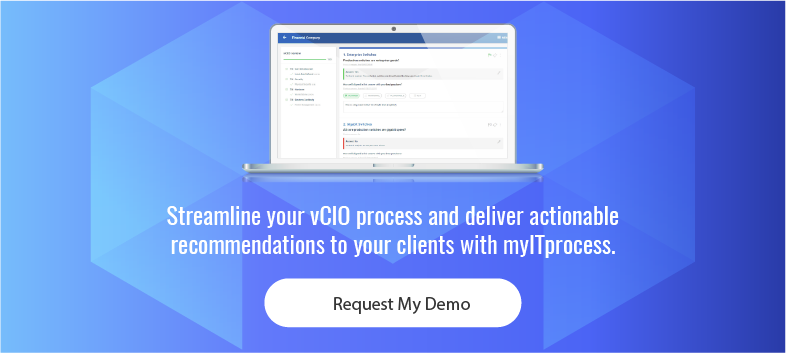
Request My Demo

Technology Success: Should You Bring Your MSP Customers Along for the Ride?

As I’ve mentioned before, the next MSP evolution is Technology Success. Just being an MSP isn’t a competitive advantage in today’s marketplace. The MSP market has matured and reached a saturation point. To survive, you must — since you and your competitors are probably using the same technologies and tools — evolve by providing higher levels of business service to your customers.

Becoming a Technology Success Provider (TSP) is going to take some time. If you are new to the Technology Success model or need a refresher, check out this free guide.

One of the most important actions you can take when building a value-based TSP is to keep your customers in the loop. Make them aware of what you’re doing every step of the way. You owe it to them, don’t you?

This means your customers must look at you differently — and with the right effort, they will.

On your way to Technology Success World?

Beginning your journey to Technology Success World is the first step to transitioning to the TSP model, but what you must remember is this: Don’t leave anybody behind, including your customers.

You should always communicate changes to your customers (this is especially true if you’re raising the price of your offering). You must be able to clearly explain the following in simple terms: the changes being made, why you’re making them, and how they’ll ultimately impact your customers.

The earlier on you inform customers of changes, the better off you’ll be in the long run. That’s why bringing customers along with you on your journey to Technology Success World is key to your success as an TSP. Your customers want to know where you’re heading, so invite them on the ride.

While you’ve got their attention, talk about your new proactive process: Technology Success.

While I’ve got you, let’s discuss Technology Success and what it means for you

When talking about Technology Success with your customers, highlight the value the TSP model delivers to them in a way they can understand. Talk in their language, not yours.

Point out the significance of Technology Success being a proactive process instead of a reactive one. The experienced TSP can effectively and efficiently reduce reactive noise levels. Instead of focusing on reactive tasks — such as managing tickets, alerts and projects — TSPs build strategic relationships with clients to assist with impacting overall business initiatives.

They also go out of the way to uncover technical risk or pain (a process known to TruMethods members as Technical Alignment). Uncovering technical risk is an ongoing process. TSPs dedicate resources to uncovering technical risk. Compared to MSPs, being proactive about uncovering technical risk is just one of the many ways TSPs provide additional value to their own customers.

TSPs build strategic relationships with their customers. Don’t wait to transform your business. Begin as soon as you start your journey to Technology Success World by including your customers. Keep them in the loop every step of the way, and be sure to sit down with them to highlight the benefits.

New call-to-action

In Times of Crisis, Your MSP Leads Are Closer Than You Think

I think we can all agree that the COVID-19 pandemic has presented MSPs with a range of new business opportunities, particularly in the cybersecurity space. Instead of trying to have conversations with prospects about why implementing enhanced security measures is essential, why not have candid discussions with business leaders you connect with on a regular basis?

You may not know this about me, but I do enjoy smoking the occasional cigar. So, during the pandemic, I decided it’d be a good idea to meet up with some friends of mine once a week to sit outside, enjoy the beautiful weather, smoke a socially distant cigar and talk shop.

At one of our more recent gatherings, I began asking questions about how the pandemic has impacted them and their businesses. We went around the circle and discussed some of the changes and pivots we had to make to keep our shops up and running. But, at some point during the conversation, we began talking about our employees and what it’s like having them work from home.

So, naturally, I started asking my friends questions about the technologies they were using, how their employees were accessing their networks, the types of security measures they put in place — and it quickly became apparent to me that all my friends had taken on additional security risks when shifting their employees to remote work.

When I asked my friends questions about how their vendors handled certain security situations or the conversations their vendors had with them around the changes made to their systems and networks to accommodate remote work, my friends moved further and further up in their seats.

Of course, they had no idea what I was talking about.

I finally ended the discussion by finding out how many employees each of them had and what each of them were spending on IT, and used price as a gap to explain why all of them had some maybe serious potential issues.

With the significant changes being made in the way we do business and the ever-evolving IT cyber threat landscape becoming increasingly complex, there are plenty of opportunities for MSPs to uncover pain in a way that business people really understand.

And, oftentimes, your leads are closer than you think. They’re usually sitting around the fire with you.

MSP Sales Mistakes

Keep Your MSP Customers Compliant with myITemplates

Compliance is top of mind for many MSPs in today’s business climate. While there are industry standards for MSPs to comply with, there are also technology standards for them to consider. What if I told you there’s an efficient way to ensure your clients comply with both?

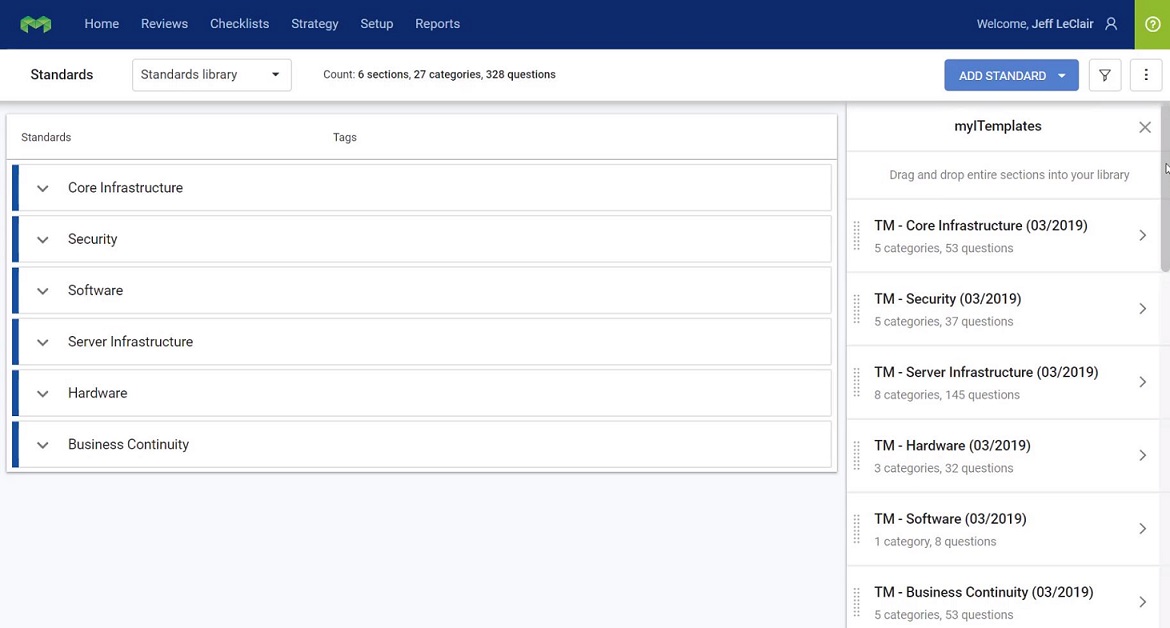
The TruMethods team has built a great feature into myITprocess that will help you easily keep up with industry technology standards. Have you noticed it yet? myITemplates, the new feature enables MSPs to populate premade industry compliant technology standards into their standards libraries. With the help of myITemplates, you can better tailor your assessments for clients based on their specific industry needs and requirements.

If you’re unfamiliar with myITemplates, there are a couple of things you should know before using it.

Compliance is the responsibility of every MSP

Keeping customers compliant should be a top responsibility for an MSP and with the proper tools and processes in place, compliance management shouldn’t be an overwhelming task for your team.

Compliance is incorporated into both the TruMethods framework and myITprocess, our vCIO platform and dashboard. TruMethods members use the technology alignment process to align client technology with their own standards.

The technology alignment process is how our members create consistency across their portfolios and minimize reactive issues. It’s a proactive process designed to assist MSPs with lowering reactive noise and gaining competitive advantages in an overcrowded marketplace.

How myITemplates can help you

If you’re new to the technology alignment process, evaluating standards for your clients may seem intimidating at first. You may be worried about choosing the wrong standards and putting you and your customers on the path of no return. To help guide you with the technology alignment process, our developers began working on a myITprocess feature a little while back — and it’s now ready for use.

With myITemplates, instead of having to manually add standards, MSPs can now select standards templates from the standards library in myITprocess. If you’re unsure of the standards you should assign for your clients, these customizable templates are designed to be great starting points.

Our developers also added templates for a range of industry standards, including NIST, HIPAA, PCI and GDPR. We pull our information for these templates from the standards databases available to everyone online.

We also update the industry standards templates in myITprocess whenever a change is made by the overseeing agencies, so you never have to worry about working with out-of-date templates.

Keeping customers compliant is a must, but no matter how you go about choosing your standards, you should always assess client technology on an ongoing basis. Using the new myITemplates feature in myITprocess allows MSPs to proactively monitor the technology alignment process.

Request My Demo

Improve MSP Efficiency with a Support Cost Gut Check

Taking inventory of employee time is a great way to determine how employee efficiency can be improved. But even though this assessment is fairly straightforward, many MSPs avoid it. If this sounds like you, you’re in luck. There’s an even easier way to determine how many seats one support resource can manage.

Time and time again you’ve heard us at TruMethods talk about how important it is for MSPs to calculate RHEM (reactive hours per endpoint per month) to gauge how time is being spent each month on addressing reactive IT tickets. The less time MSPs spend on reactive tasks, such as alarms, user requests, time and materials, tickets, and unscheduled service, the better. By taking a more proactive approach to address potential issues with your clients’ IT systems, you’re able to cut down on your reactive time and client downtime. This leads to profitability.

But RHEM (which is calculated by simply adding up the amount of time dedicated to reactive tickets in a month and dividing that number by the number of endpoints you’re responsible for) has its own issues. For example, even though looking at RHEM on a trendline is a great way to determine how you can lower reactive noise, the actual RHEM number an MSP reports is almost always either overstated or understated.

And the reason for this is everyone is going in and putting time on tickets all day. Just by the nature of that process, you’re going to be understating or overstating your RHEM number. What your RHEM ultimately determines is how many seats can one support resource manage.

So, what’s the easier way to determine how many seats one resource can manage efficiently?

Try conducting what we call a “support cost gut check.”

To do this, divide the number of your resources by the number of seats they manage to calculate seats per support resource. In other words, how many seats do you have under management and how many resources from the support standpoint do you have available to manage those seats, and that ratio of support resources to seats gives you a really good idea of what you’re working with.

This approach removes the time entry work required when calculating RHEM and provides you with an overview of what your efficiencies and cost per seat are in the real world.

While you should still calculate RHEM, figuring out your support cost gut check number gives you a quick and easy way to determine whether you’re spending too much time on reactive tasks.

New call-to-action

Creating an MSP Incident Response Plan? Here’s Some Advice

The best way to ensure things go from bad to worse for your MSP clients is to not have an incident response (IR) plan in place when you’re hit with a cyberattack.

And many MSPs don’t have an IR plan to follow for one simple reason: They don’t know how to develop one. To make things easier for them, Chris Loehr, EVP of Solis Security, and Wes Spencer, CISO of Perch Security, recently joined me on a webinar to discuss what MSPs should know about IR plans.

Here are some of the tips Chris gave during our webinar on developing an MSP Incident Response plan.

Keep your IR plan up to date

Your IR plan is a living document. When it comes to an IR plan, there’s no such thing as setting it and forgetting it. Updating your IR plan from time to time is absolutely necessary to prevent an incident from getting out of hand. Review your IR plan at least once a quarter and adjust it accordingly. For example, you may need to update contact information after an executive leaves your business. There’s no excuse for having out-of-date IR plan. Your plan must be reviewed on an ongoing basis for any discrepancies. Put someone in charge of keeping your IR plan updated with the latest and most accurate information. Don’t ever let a “thin layer of dust” accumulate on your IR plan.

Who needs to be involved?

While not everybody in your business needs to be included in your IR plan, some people do, especially those directly involved with your IR strategy. Review your org chart and identify your key players, some of whom may be actually outside your organization (e.g., a public relations specialist or an attorney). After identifying your key players, find backups for each of them. When an incident occurs, you can’t go looking around for someone. There needs to be a body in the seat, ready to go.

What should your team members be doing?

When an incident happens, your team members (each and every one of them) should know how to respond. Every role in your IR plan should be clearly defined. For example, determine who in your organization can talk with customers (because not everybody can or should). Take it a step further by indicating words they should or shouldn’t use with customers. Outline everything in your IR plan.

Involve your experts early

Call in your experts early, especially when something major happens. Always inform them when something goes awry. Even though they may cost you a pretty penny upfront, your experts — your attorney, insurance agent, etc. — will more than likely save you more money in the long run. They can help with evaluating and addressing situations when they arise, so whatever you do, don’t keep them in the dark.

Slow and steady wins the race

Every decision you make during a crisis matters. Things can go wrong fairly quickly (and even publicly). That’s why preparation is key to your business’s survival. Once your IR plan is set, you must make a dedicated effort by rehearsing it as often as possible. The time to practice your plan isn’t when you’re in the middle of a crisis. You’re going to feel pressured, and people around you are going to encourage you to put your foot on the gas, but don’t give in. Act in accordance with your IR plan.

cybersecurity ebook

Q&A: Why Peer Groups Hold MSPs Accountable

Holding yourself accountable for your outcomes isn’t easy. But when you get together with a group of like-minded individuals, anything is possible.

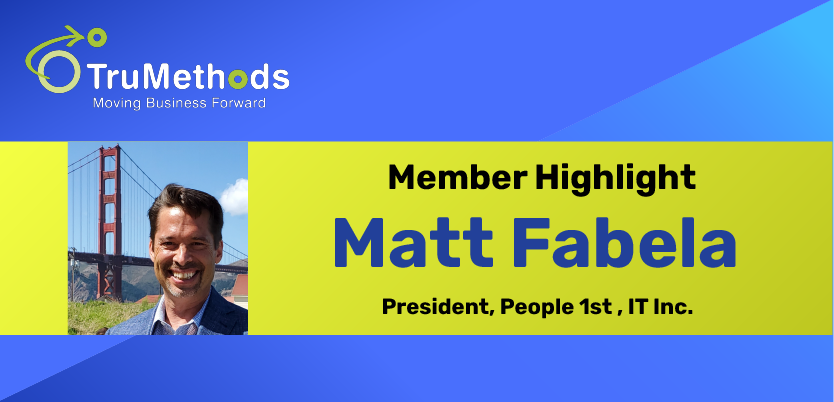
“The biggest barrier to success in my business is me — not afraid to say that,” Matt Fabela, President at People 1st, a San Francisco-based MSP, told me during a conversation. “Gary shows you how, through consistent action (daily disciplined steps), you can transform your business from an average MSP to a World Class MSP. “TruMethods is not built on hypothetical theory — it’s built on proven success from MSPs that have applied its processes.”

During our discussion, Matt revealed how his company has grown since joining the TruMethods TruPeer group, how peer groups can be beneficial to MSPs and why MSPs in peer groups have a competitive advantage in their respective markets.

A lightly edited transcript of our conversation follows.

Why did you decide to join TruMethods?

I joined TruMethods for several reasons. First, when I was introduced to Gary Pica’s method for building a World Class MSP, I wanted what he had. Gary had showed other MSPs how to build their businesses where they had “control” of their business and their product, pricing and client success. The process that Gary developed over the years to create separation from the average MSP was impressive. Second, Gary built two very successful MSP businesses and I knew his program mirrored the way he operated. Gary’s method for creating roles and responsibilities within a company was key to lowering our internal noise and developing real leverage over time. From the start, applying the TruMethods processes immediately began to create results for us.

Which TruMethods peer groups did you decide to join and why?

I joined the TruPeer group. The main reason for joining a peer group was to be held accountable. My company was operating at the same comfortable level for a while; however, I wanted to grow it, so joining a peer group seemed like a good idea. Another big reason for joining the group was to have a sounding board, a forum where I could share challenges with (and successes). So far, it has met my expectations.

Why are peer groups beneficial to MSPs?

In my experience, most MSPs are too busy putting out fires and working on day-to-day operations and not really able to focus on what it takes to move the business forward. With a peer group you work on the most important metrics that will move your company forward. Meeting with a peer group keeps you accountable, but it also teaches you to be disciplined in the areas that will engender real changes in your business. Real leverage is created, and leverage is power.

Why do you think MSPs that participate in peer groups have a competitive advantage?

When you surround yourself with other like-minded people, you start to develop habits that other people that aren’t in a peer group most likely will not achieve. When you have other MSPs in your group helping you achieve your goals, it empowers you to do better and also fix issues that without a peer group might not have been brought to light in a timely fashion. The competitive edge is in the numbers. The more people you have on your team working toward the same level of success the higher the chances are of success. An easy analogy would be: Do you think you could go farther rowing a canoe by yourself, or with a team of five people? The team of five people is your peer group.

New call-to-action

How MSPs Can Avoid Extinction by Evolving

Without a doubt, the MSP space is evolving, especially with the COVID-19 pandemic still in effect. Anyone who has been in our industry for as long as I have will tell you that. The bad news is many MSPs are stuck in the past. They haven’t realized yet where our industry is or where it is heading — nor do they currently have the necessary tools, resources and mindset to survive. It’s time these MSPs come to terms with the following hard truth. They need to evolve or be left behind.

While there are several reasons why we’re witnessing this evolution, there are also numerous ways for MSPs to adapt and overcome challenges presented to them as a result of this inevitable change.

How the MSP space is evolving

For one, competition has changed. There are four times as many MSPs today as there were 10 years ago. That’s tremendous growth when you think about it. It’s now more important than ever for you to find out how you can stand out in an overcrowded marketplace. Don’t wait any longer.

There have also been plenty of private equity-backed roll ups in our space over the years. Some of my largest customers have been acquired by these firms. MSPs are also buying other MSPs. One of the top reasons why we’ve been seeing this is it’s a great strategy for smaller MSPs looking to expand geographically. Growing organically takes too much time. Acquiring already established MSPs may be a better strategy for those unwilling to wait.

Lastly, many local MSPs have broken the $5-million barrier. These MSPs typically have dedicated functions for sales and marketing, which they didn’t have access to five years ago. Why does this matter? These MSPs are your competitors and can use these resources in an efficient way.

So what can you do?

Become a Proactive MSP

When I talk to MSPs about being proactive, many of them claim to know what I’m talking about. Most of the time, though, I find out they don’t. Their attitudes about being proactive oftentimes change significantly after I begin bombarding them with questions about process.

There’s a big difference between being proactive and having proactive intentions.

Here’s the thing: You’re not proactive if you don’t have at least one service delivery role that’s not assigned tickets, alerts or billable projects. The only way to be proactive is to build proactive roles and processes into your seat costs, so that you can afford to do it.

Operational functions within your MSP should work toward driving down the time spent on reactive tasks. For example, to reduce reactive noise levels (or reactive tasks) and build more valuable vCIO processes, MSPs must build an IT strategy that aligns client technologies with their IT standards and shows them the impact of possible misalignments. A company that has a proactive vCIO approach implements the alignment process and utilizes findings to make recommendations toward technical goals. They focus on the business impact and how this can impact their client’s business in a strategic way.

MSPs need to realize the true impact of reactive noise on their business and their clients.

What do our customers actually want?

The security threats right now are shining a light on the dirty little secret of managed services—our business models haven’t evolved. Sure, we’re all now billing customers monthly. That’s different. But what about what’s happening back at our offices? Really similar to how it’s been all along, right?

Let’s take a step back and ask ourselves the following: What business are we in?

Are we in the support business? The lifecycle management business? What about the cloud business? How about the hardware and software business? What about the security business?

To figure out what business we’re in, we need to ask ourselves, “What do our customers want?” Do our customers care about the technology we’re deploying? Probably not. What about running their businesses without any hiccups? Do they care about that? Probably.

It’s inevitable: In order for MSPs to survive in today’s market, they must not only take a proactive approach to IT, but adapt to the needs of customers. They must define roles and process to lower reactive noise, build solid strategic relationships, and have command over cost and value drivers if they want to succeed in today’s business climate. Avoid betting your business on trends. Trends come and go, but true value will last.

Request My Demo

The Secret Weapon of the vCIO Process

Is your MSP a Technology Success Practice (TSP)? A TSP understands the challenges and opportunities for building a strategic relationship with clients and focuses on the client’s success through the proactive management of technology. The vCIO role is one of the more important parts of a Technology Success Practice. The reason for this is because clients will take recommendations from someone with which they have a business value-added relationship much more easily than from someone who they see as ‘just a techie’ or ‘just a salesperson’. But the vCIO can’t do all of this on their own; they need their secret weapon, aka the Technology Alignment Manager (TAM) role.

Why TAM is the Secret Weapon

Why is the TAM role so important to the technology success process? While a vCIO manages the business relationship and goals of each client, the TAM is instrumental in maintaining the Standards Library and aligning customers to those standards.

What is a Standards Library? It is a questions list of technical and IT compliance standards that lets you determine the status of all elements of your clients’ technologies. While other employees and roles attend and contribute to the Standards Committee meetings, the TAM has a ground-level view of how those standards are applied at the client site, and can be incredibly helpful in creating impactful reviews. Those reviews are then completed on site, generally once a month, and the TAM is the one gathering all the information needed to complete it. On the surface, it may seem like all the TAM is doing is answering yes/no questions. And in a way, that is correct, but the impact of those questions is so much larger than it seems at first glance.

We at TruMethods often recommend a vCIO make three types of recommendations: strategic, end of life, and research-based. How can a vCIO make a research-based recommendation to a client without any research being completed? TAMs are those researchers. They are the ones that provide that valuable information on which vCIOs make many of their business assessments. A vCIO cannot live up to their full potential without the TAM process backing them up. Think about it this way; a TAM is similar to when you go to the doctor and talk to a nurse or a nurse practitioner. They take your blood pressure, ask you why you’re at the doctor’s office that day, get your height and weight, and gather pertinent information for the doctor.

The vCIO is like the doctor that comes in and helps to assess the situation, and they use the information the nurse gave them to give a proper diagnosis. If the doctor recommends surgery and you as the patient agree to it, the surgeon is the one who actually goes in and fixes what’s wrong, just like the project team would. Think about how much more relaxed a regular General Practitioner’s office is compared to an Emergency room. This is the same as comparing reactive project work to a proactive MSP.

How the TAM Assists the vCIO

Most decision makers that vCIOs meet with are going to be business owners. They don’t have time for anything that is not concrete. While not everything will be mitigated by addressing logical issues, it certainly goes a long way in convincing a type-A, fact-oriented person (as business owners usually are) to do something. The TAM is gathering those facts for the vCIO, who translates them into business and personal ‘pain’ the client is feeling.  Pain is part of the framework prospects can use to simplify and clarify the decision-making process. The goal is to have prospects view their current IT situation differently. Here are a few examples of how to phrase a recommendation to a client by addressing logical pain.

“We found that this switch was not compliant in this way, it’s going to impact your business in “x” way, therefore we want to replace the switch.”

“We found that you don’t have a password policy in place, this leaves you open to security risks, therefore we want to talk to your employees about password policies.”

Gaining Command

Perhaps most importantly, the TAM role will help the vCIO have command over a client’s environment. You want everything that you can control for the client to actually BE in control. Without gathering information and checking things regularly, there’s no real way to know if you are actually compliant. Without compliance and a process for checking compliance, you and your clients are not secure!

Our myITprocess software tool can be utilized as a client decision-making engine and to build a repeatable, high-value vCIO process. It provides TSPs with the opportunity to offer clients a strategic outlook on their business. The overall goal of a TSP is to give clients succinct and appropriate information for them to make decisions on their technology needs, and the TAM process helps clients do that in a big way.

Request My Demo